Light, Color, and the Bravura Brush

John Singer Sargent, 1903. Photograph by James E. Purdy. Courtesy of Wikimedia Commons. Public domain.
Sargent’s Watercolor World
John Singer Sargent (1856–1925) remains one of the most admired American painters of the late nineteenth and early twentieth centuries. Best known for his portraits, he was also a remarkable watercolorist.
For Sargent, watercolor meant freedom.
Across more than 2,000 watercolors, he explored an extraordinary range of subjects: the canals of Venice, Alpine landscapes, Mediterranean islands, figures in the Middle East, the forests and coastlines of America, as well as family, friends, gardens, fountains, architecture, and animals. Travel not only provided him with new subjects, but also allowed him to observe quickly and paint directly in constantly changing surroundings.
Sargent’s watercolors do not depend on meticulous description. Instead, they are shaped by selection and restraint. A few decisive washes, a sharply defined edge, a passage of untouched paper, or a sudden contrast of light and dark were often enough to convey sunlight, space, heat, and movement. Evan Charteris described this quality in his 1927 biography, John Sargent:
“To live with Sargent’s water-colours is to live with sunshine captured and held, with the lustre of a bright and legible world, ‘the refluent shade’ and ‘the ambient ardours of the noon.’”
Many of these works were painted apart from the demands of formal commissions and public obligations. In watercolor, Sargent could be freer, lighter, and more personal. To stand before his watercolors is to feel as though sunlight, a passing breeze, and the air of distant places have entered the room, bringing with them a sense of lightness, warmth, and joy.
The Bravura Stroke
At the heart of Sargent’s watercolor technique is his celebrated bravura brushwork: bold, confident, and remarkably economical. His strokes rarely feel hesitant or overworked. Each mark appears purposeful, yet the result remains fresh and alive.
What looks spontaneous is actually supported by precise judgment. Sargent understood when to assert a crisp contour, when to let forms dissolve, and when to let the paper breathe. This balance between control and freedom gives his watercolors their distinctive energy and clarity.
A Lasting Artistic Legacy
Sargent’s works are held in major museum collections around the world, including The Metropolitan Museum of Art in New York, the Museum of Fine Arts, Boston, Tate Britain in London, and many others. His watercolors continue to inspire artists who are drawn to the vitality of direct observation and the expressive possibilities of the medium.
In the Light of Sargent
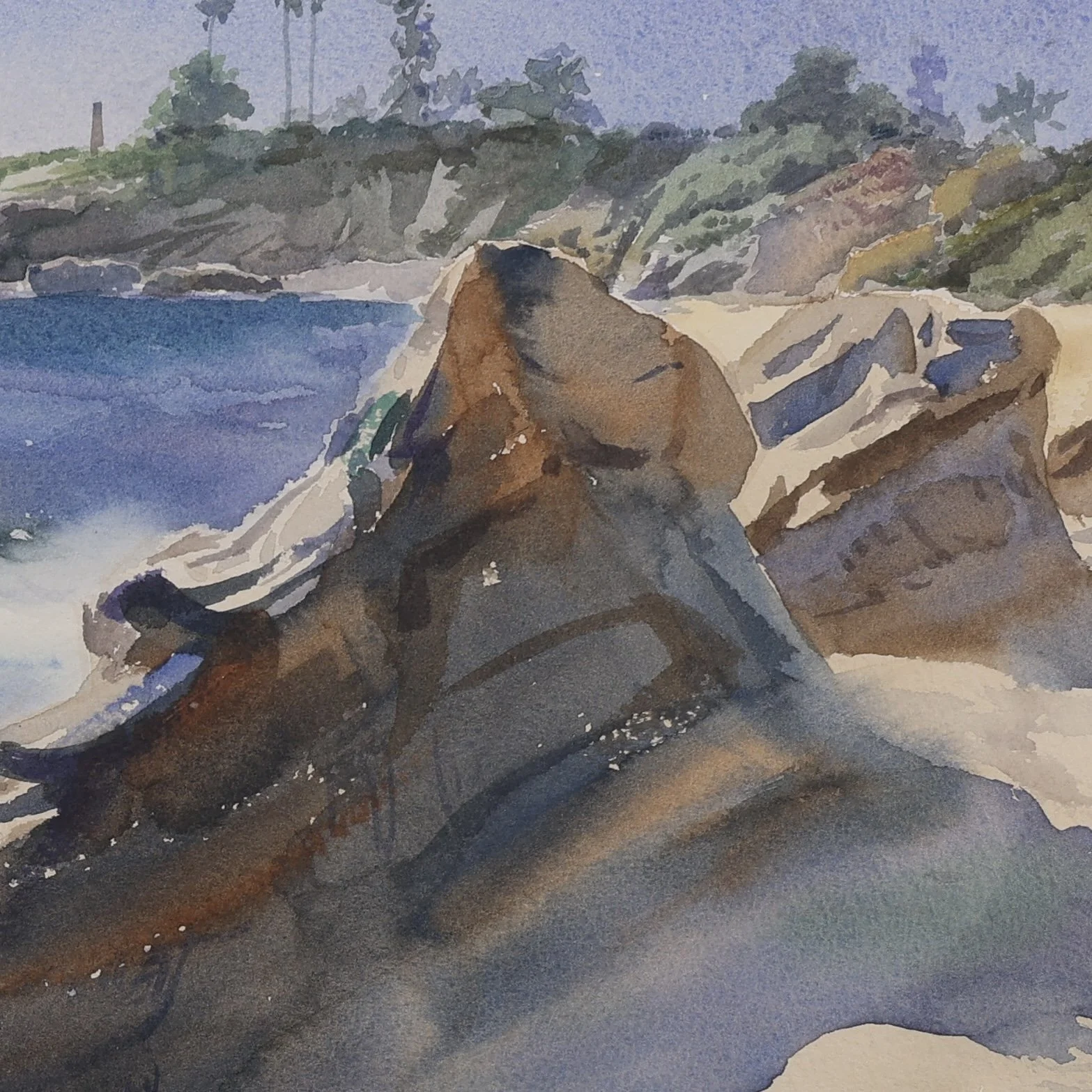
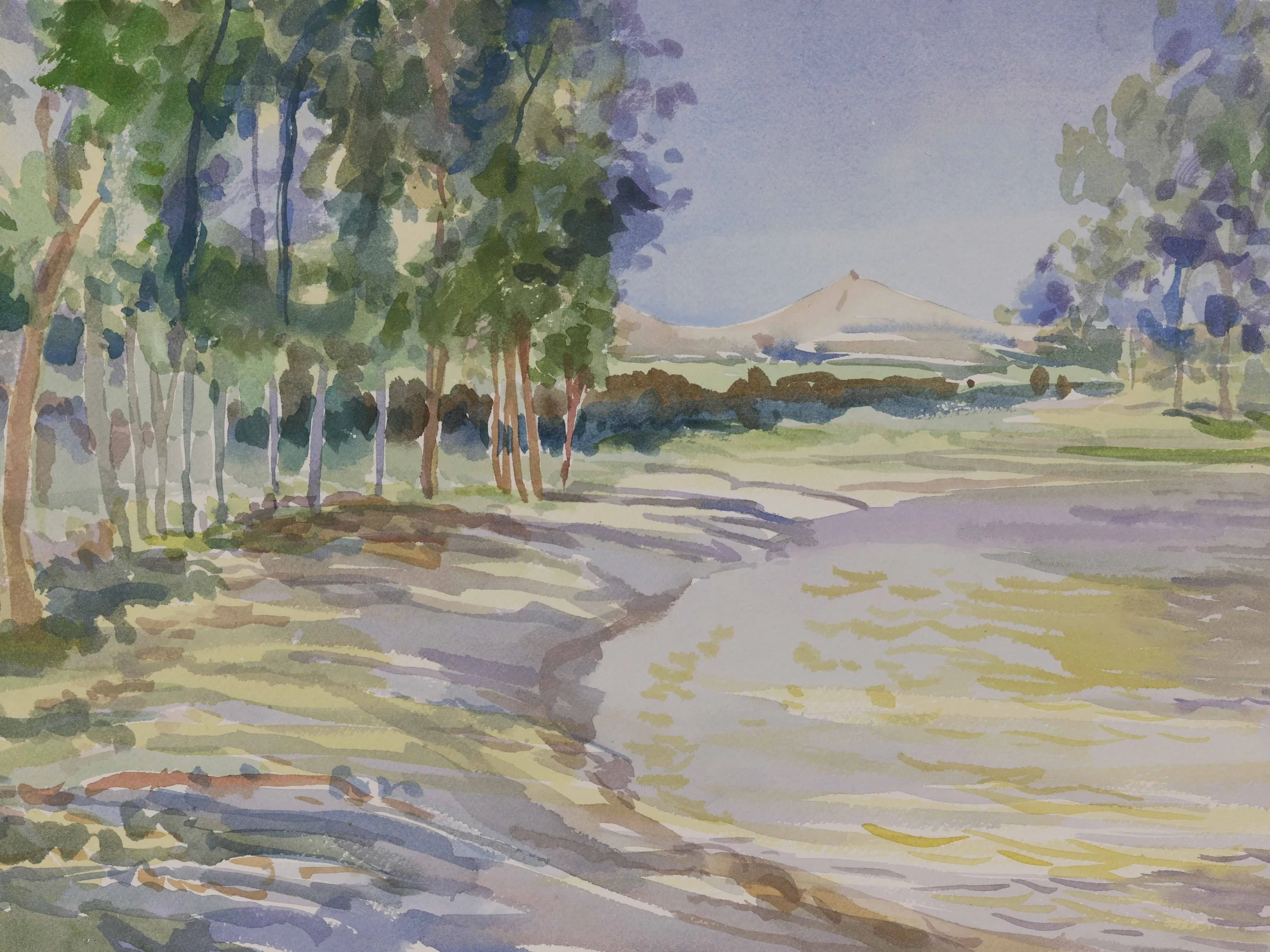
This series consists of individually hand-painted watercolor studies after specific works by John Singer Sargent. Through close observation and repeated practice, I study his way of seeing and his handling of light, color, composition, rhythm, and atmosphere.
As a watercolor artist with a background in design, I approach each painting through both observation and structure. I am particularly interested in the underlying order beneath Sargent’s seemingly effortless washes—the balance of shape, contrast, edges, and visual movement, as well as his handling of pigment, water, and brushwork. Together, these elements give his paintings both clarity and vitality.
Living and working in Los Angeles has made Sargent’s treatment of sunlight feel especially immediate to me. The clear California light, the warm reflections on walls and pavement, and the sharp contrast between sun and shade often recall the luminous atmosphere of his watercolors. Studying his work is not only a way of engaging with art history, but also a way of looking more carefully at the light around me.
These works are not prints, mechanical reproductions, or museum-authorized editions. Each is an individually hand-painted watercolor study after a specific work by John Singer Sargent, created as part of my continuing study of his watercolor practice. Made for contemporary interiors, they bring reflected light, the energy of the brush, and the quiet elegance of art history into the spaces where people live and work.